
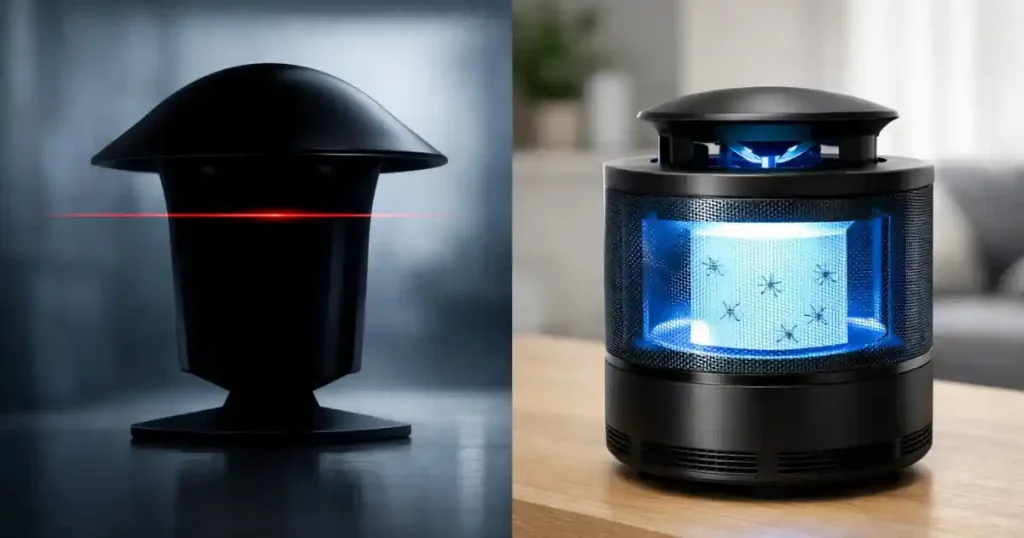
One calm guide to what laser really means, what actually works indoors, and how to keep your home quieter and less bitey.
Most products called a laser mosquito zapper are really UV light traps or electric grid zappers, not true lasers. For indoor use, I look for a fully enclosed design, easy cleanup, and the right coverage for one room. Pair any device with screens, a fan, and a quick water check outside to cut bites fast.
My quick kitchen story with buzzing at bedtime
A few summers ago I kept hearing that tiny mosquito whine right when I was trying to relax. You know the one. I would finally sit down, and then I would hear it near my ear like it was doing a victory lap.
I tried the classic move first. Lights off, phone flashlight on, stare at the wall like a sleepy detective.
It worked sometimes. But what actually helped me sleep better was a simple indoor setup that made the room less inviting for mosquitoes in the first place, plus one device that matched the room and my family habits.
That is what I want for you too. Less buzzing. Fewer bites. No drama.
What a laser mosquito zapper usually is
Here is the honest truth. Most products marketed as a laser mosquito zapper are not using a real laser beam to track and zap insects.
In most listings, laser is a catchy word for one of these
UV light plus electric grid zapper
This is the classic zap sound device. It attracts insects with a near ultraviolet light, then an electric grid kills them when they touch it.
These can kill some mosquitoes, but many experts note they often kill lots of other insects too, and they do not reliably reduce mosquito biting overall. That matters more outdoors, but the basic point is still worth remembering indoors.
UV light plus fan plus sticky card trap
This is my favorite style for many homes. The light lures small flying insects, the fan pulls them in, and they stick to a hidden glue card.
It is quieter, and cleanup is usually less gross.
True laser tracking devices
These are the sci fi looking units that claim to detect a mosquito in mid air and hit it with a laser. A recent example is a crowdfunded device called Photon Matrix that has been covered in tech news.
These are interesting, but they are new, expensive, and not the same as the small plug in gadgets most people are shopping for.
So when you say laser mosquito zapper, I want you to get what you actually need, not what the marketing wants you to imagine.
What actually works best indoors and why
Indoors is a special battlefield. You have tighter spaces, fewer insects, and more control over light, airflow, and entry points.
In my experience, the best indoor results come from a combo plan
Step one stop mosquitoes from getting inside
This sounds obvious, but it is powerful.
I look for these first
Repair window and door screens
Even tiny gaps matter. Public health guidance consistently puts screens and exclusion at the top of the list for keeping mosquitoes out.
Watch doors
If you have kids, pets, deliveries, or a patio habit, doors can be the biggest mosquito highway.
A simple habit helps. Open, move, close. No lingering.
Step two make it harder for mosquitoes to land
Mosquitoes are weak fliers. Air movement really messes with their ability to hover and land.
A basic fan in the bedroom or living room can be surprisingly effective, especially at night when you are sitting still.
Step three use a device that matches the room
This is where your laser mosquito zapper search comes in.
The best device is the one you will actually keep using, that is safe in your home, and that fits the size of the space.
My simple indoor chooser that never fails me
I use this decision tree when friends ask me what to buy.
If you have kids or pets who touch everything
I lean toward a fan plus sticky card trap.
Why
- No exposed high voltage grid
- Usually quieter
- Easy to toss the glue card and move on
If you want the fastest kill and you can place it safely
A fully enclosed grid zapper can work well for a single room, especially where mosquitoes are coming in near a door or window.
But I only like it when the outer cage openings are small enough that curious fingers cannot reach the grid.
If you are tempted by a true laser device
Treat it like a new gadget category, not a proven household staple.
I would only consider it if
- The laser safety class and safety features are clearly documented
- It has strong guarding so you cannot stare into the beam path
- You understand it may not have the same long track record as common indoor traps
Indoor safety checklist for any zapper or trap
I care about safety as much as bite reduction. Here is what I look for.
Fully enclosed contact protection
If it is a grid zapper, the outer cage should prevent accidental contact. I want small openings, sturdy housing, and no flimsy plastic that flexes.
Stable base and tip resistance
If it can tip, it will tip. Especially on a nightstand.
No ozone claims and no air cleaner marketing
Be cautious with any device that combines pest control with air cleaning claims, especially if it mentions ozone. Regulatory agencies have warned that some pesticide devices can involve UV or ozone concepts and that consumers should be careful with claims.
For indoor mosquito control, you do not need ozone.
Easy cleanup that you will actually do
The best device is the one you keep clean.
For sticky traps, replace the card when it is dusty or full.
For grid zappers, unplug it before cleaning and follow the manual. Some models have a tray. Some need brushing.
Light control
UV based devices work best when they are the brightest attractor in the room.
That means
- Use it in a darker room if possible
- Do not place it near a bright lamp or a sunny window
- Give it time to run before bed if buzzing is a night problem
Coverage and placement for indoor success
Coverage numbers on boxes can be wildly optimistic. For indoors, I keep it simple.
Aim for one device per problem room
If you have mosquitoes in the bedroom and kitchen, do not expect one unit in the hallway to solve both.
Place it away from your body
This is a big one.
If a device attracts mosquitoes, you do not want it right next to your face. Put it a little away from where you sit or sleep, but still inside the room.
I like a spot near where mosquitoes enter, like near a door, window, or laundry area, but not directly beside the bed.
Give it a clear line of airflow
Fan traps work better when the intake is not blocked by curtains, piles of stuff, or furniture.
A simple comparison table for indoor choices
| Device type | Best for | What I like | What I dislike | Safety notes |
|---|---|---|---|---|
| Fan and sticky card UV trap | Bedrooms, nurseries, living rooms | Quiet, easy cleanup, no zap sound | Needs replacement cards | Keep away from little hands who love peeling stickers |
| Enclosed grid zapper | Kitchens, entry areas, garages | Fast kill when insects touch grid | Bright light, zap noise, bug bits possible | Only use models with strong protective cage and stable placement |
| Handheld electric swatter | One mosquito you can see | Immediate and satisfying | You become the hunter | Keep charged safely and store out of reach |
| True laser tracking unit | Early adopter gadget fans | Potentially targeted approach | New category, higher cost, limited long term data | Only consider with clear safety documentation and strong guarding |
What about disease risk and peace of mind
If you live where West Nile, dengue, or other mosquito borne diseases are a concern, I want you to lean on layered protection.
An indoor device can reduce nuisance mosquitoes. But the biggest risk reduction usually comes from keeping mosquitoes out and preventing breeding near your home.
That means
- Screens and door habits
- Weekly water check outside
- EPA registered repellent when you need it
- A fan at bedtime if bites happen while you sleep
If you ever get fever, severe headache, body aches, rash, or you feel truly unwell after bites, it is worth calling a clinician. Most bites are just itchy. But I never ignore symptoms that feel bigger than normal.
My weekend ready indoor mosquito plan
If you want something you can do today, here is my favorite simple sequence.
In ten minutes
- Walk your home and check screens and door gaps
- Put a fan in the room where you get bitten most
- Pick one device for that room based on your household setup
In twenty minutes outside
- Dump standing water in anything that holds it
- Turn over buckets and toys
- Scrub birdbath edges if you have one
That weekly water habit is one of the strongest mosquito moves you can make.
Tonight
- Run the trap in a darker room
- Keep it a little away from your bed
- Use a fan on a higher setting if you can tolerate it
A realistic take on expectations
I always set this expectation with friends.
An indoor device is not magic. It is a tool.
If mosquitoes are breeding right outside your home or entering through a gap, you may keep seeing a few until you fix the source.
But when you combine exclusion, airflow, and a well matched trap, the change can be dramatic. And your nervous system will thank you for the quieter nights.
Video idea for this post
I would film a simple room demo showing three placements in a bedroom, then test which spot catches the most over two nights.
Key Facts
- Most laser mosquito zapper products are UV traps or grid zappers, not true lasers
- Indoor success improves with screens, closed doors, and fewer entry gaps
- Fans help because mosquitoes struggle in strong airflow
- UV traps work best when they are the brightest light in the room
- Keep attractor devices a little away from where you sleep or sit
- Sticky card traps are often the safest choice for kids and pets
- Grid zappers should have a strong protective cage and stable base
- Weekly standing water cleanup reduces future mosquitoes fast
FAQ
Do laser mosquito zappers really use lasers
Most do not. Many use UV light and either a fan or an electric grid. True laser tracking devices exist but are a newer and less common category.
Are indoor bug zappers safe around kids and pets
They can be, if the design is fully enclosed and cannot be touched. In many homes, a fan and sticky card trap feels safer and simpler.
Do zappers work on mosquitoes or mostly other bugs
They can kill some mosquitoes, but studies and mosquito control experts often find that classic light based zappers catch many non mosquito insects and do not reliably reduce biting.
Where should I put an indoor mosquito zapper
Put it in the problem room, near likely entry points, and away from your bed or sofa. Keep it clear of bright competing lights and give it open space for airflow.
Should I run it all night
If buzzing wakes you up, running it overnight can help. For UV traps, a darker room improves attraction, and routine cleaning keeps performance steady.
What is the quietest option for a bedroom
A fan and sticky card UV trap is usually the quietest. Pair it with a room fan to make it harder for mosquitoes to land.
Can I rely on a zapper instead of repellent
I would not rely on it alone, especially in high risk areas. Use layers like screens, fans, and EPA registered repellent when needed.
How do I clean it without getting shocked
Always unplug first and follow the manual. Many units have a tray or brush system. Do not clean a grid zapper while it is powered.
